






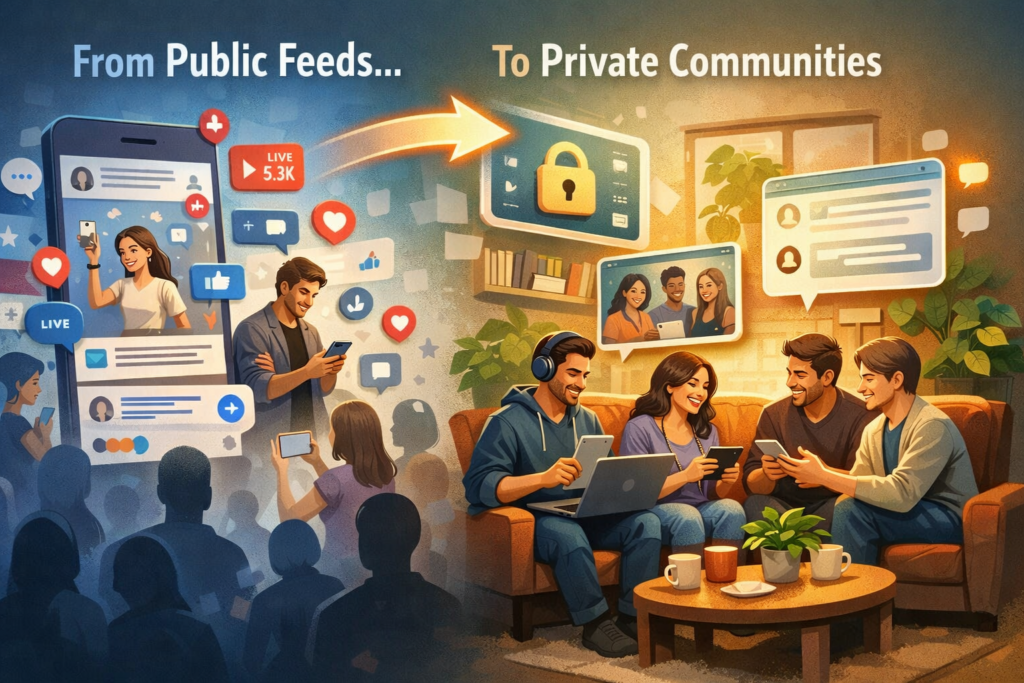
The online interaction of people is changing radically in 2026. Social media feeds which are the main breadwinners of the digital life are gradually losing their prominence. The endless scrolling and superficial interaction are not satisfactory to the users anymore. Instead, they are headed to smaller, more targeted online communities that provide valuable interactions and a sense of belonging.
User expectations are changing and are driving this shift. Viral reach and mass visibility are no longer desired by people, who appreciate privacy, authenticity and connections. Consequently, social interaction online is soon turning into a privatised affair.
What Are Private Communities?
Invite-only or limited access online communities are places where users are identified with a particular community of people. These communities have been created unlike the social media platforms that are publicly available to encourage meaningful dialogue as opposed to publishing content to a large number of people. They may be found in social media applications, discussion boards or a membership website and are usually created around common interests, careers or objectives.
Major Characteristics of Private Communities.
- Limited or controlled access
- Specific subjects or common areas of interest.
- Higher engagement levels
- Strong sense of belonging
- Less algorithm-driven content
Why Public Feeds are being abandoned by the users.
It is getting to be an overload to users of public feeds. The never-ending flow of the content, advertisements, and posts suggested by the algorithms tend to make the process seem clustered and unpersonalized. Users have come to feel disconnected, especially more than ever, despite being more connected.
1. Privacy Concerns
It is more in tune with the current user awareness of the risks of digital privacy. In private communities, the place is safer, and more controlled and people feel free to exchange ideas and experiences without being exposed.
2. Content Overload
Brands, influencers and ads overwhelm the public platforms with too much content. This overload complicates the process of users concentrating on what is really important, and drives them into smaller, edited spaces.
3. Lack of Authenticity
The very selective character of the feeds that are publicly followed tends to create unrealistic representations of life. Conversely, small groups stimulate honest and sincere discussions, and communication has a more tangible feel.
4. Algorithm Fatigue
People are becoming fed up with algorithms that determine what they view. Critical updates on friends, or on communities, tend to be hidden, and the user experience becomes uncontrollable.
5. Mental Health Awareness
Smaller communities also provide a less stressful situation as there is less comparison and negativity. This assists users to have a healthier relationship with social media.
Benefits of Private Communities
It is not only an alternative to the private communities, but a much better social experience. These areas enable users to engage with each other more focused and meaningfully and it results in higher engagement and communication.
Due to the common interests or goals, which are common among members, discussions are more pertinent and valuable. This will provide a space in which users can feel listened to and appreciated and not rushed and impersonal as with the public platforms.
Stronger Engagement
The smaller communities are more likely to engage with members in the small communities. With the content being relevant to their interests, the levels of engagement are of course higher.
Meaningful Connections
Communications are not limited to likes and comments. Real relationships are formed by users as they converse in a deeper manner and experience together.
Trust and Safety.
These communities enable fewer spam, trolling, and toxic behavior through controlled access and provide a safer place to interact.
Improved Knowledge Sharing.
Niche communities can be a source of great wisdom and can be used to learn, exchange expertise and develop as a community.
There is an increase in the types of Private Communities in 2026.
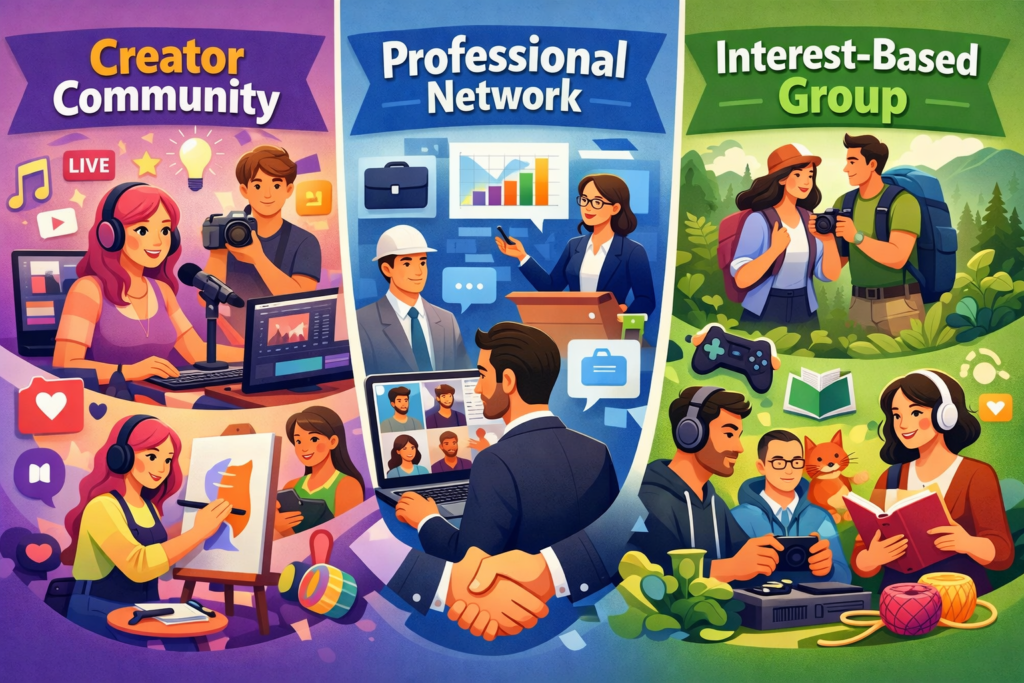
With the rise in demand for private spaces, various forms of communities are being formed to cater to the needs of various users. These societies are becoming increasingly specialized, and they are tailored to narrower interests and audiences.
Interest-Based Groups
They are the communities which are formed as hobbies or passions, like fitness, technology, or traveling. They enable them to share experiences and connect with like-minded people.
Creator-Led Communities
Influencers and creators are establishing their own exclusive spaces to their followers. These neighborhoods provide high-quality content, one-on-one engagement and a closer relationship.
Professional Networks
Career development, learning and networking opportunities can be found in industry-oriented communities. Professionals are able to share ideas and keep abreast with trends in the industry.
Local Communities
Such groups unite individuals in a given geographical region, making them interact in real life, and form local relationships.
Influence on Social Media platforms.
The emergence of private communities is compelling large social media to re-strategize. Places are no longer investing in just public feeds since they are investing in features that would facilitate smaller, more personal interactions.
It is also causing a transformation in the production and commercialization of content. Producers are leaving the use of advertisements alone and are considering the idea of subscriptions in closed groups.
Rise of Group Features
Social sites are also increasing group and messaging capabilities to facilitate individual and community-building communication.
Monetization Changes
Makers are monetizing memberships, exclusive content and paid communities instead of just depending on ad revenue.
Community-First Design
Brands are rethinking their interfaces to focus on meaningful engagement, rather than content passive consumption.
Conclusion.
The emergence of the private communities is another paradigm of internet usage. Users are leaving behind loud and crowded communal feeds to adopt smaller and more meaningful spaces where they feel secure and appreciated.
With this trend ever-increasing, social media will become more personal, engaging and humanistic as defined by the private communities, which will formulate the future of social media.
FAQs.
1. Why are private communities becoming more popular?
Private communities offer benefits like privacy, real interactions, and less content overload, which are different from public feeds.
2. Are private communities better than public social media?
While private communities are better for in-depth interaction, public platforms are useful for reaching a larger audience and being seen.
3. On what platforms do we have private communities?
Privacy groups can be supported by a lot of platforms such as messaging applications, forums, and subscriptions.
4. Are private communities beneficial to the businesses?
Yes, companies are able to create loyal following, enhance interactions, and provide exclusive value.
5. What is the future of the social media communities?
The future is in smaller, niche, and highly engaged communities as opposed to large masses of the audience.