





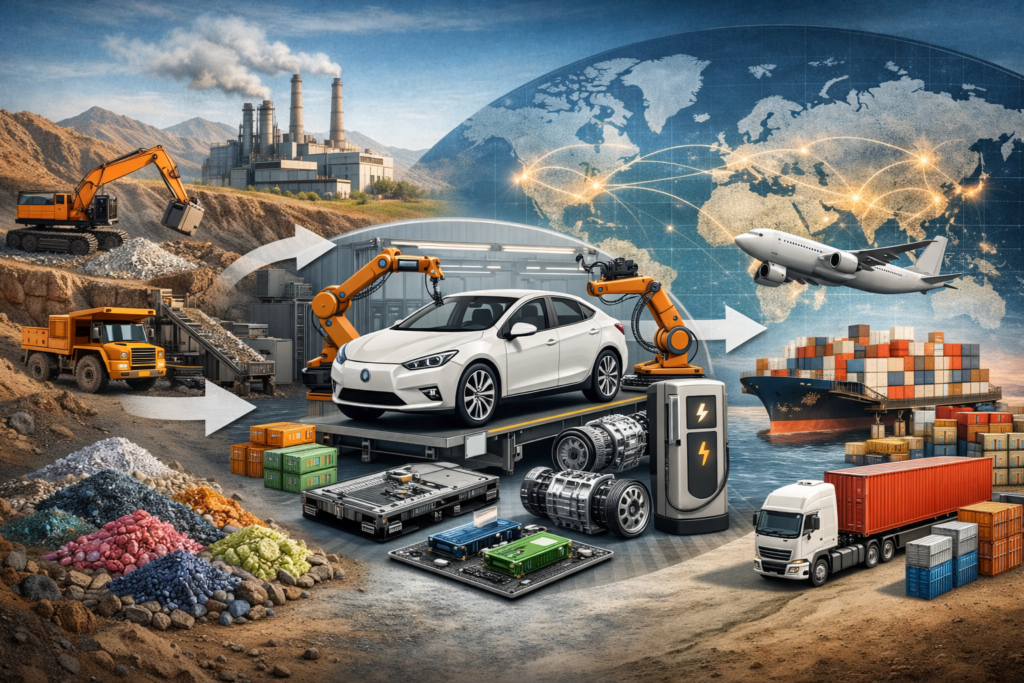
The transition to electric vehicles (EVs) is gaining momentum all over the world because of the climate objectives, state subsidies, and the increase in demand. As EVs are actively advertised as a cleaner version of internal combustion engines cars, their manufacturing requires a significant amount of rare earth elements, which have complicated supply-chains and unresolved hazards. This dependency is important to understand how sustainable and scalable the EV industry will be in the long term.
What are Rare Earth Elements and What is the need of EVs?
Learning about Rare Earth Materials.
A group of 17 chemically related metals, rare earth elements (REEs) are vital in contemporary technologies. They are not really rare as far as abundance is concerned but are seldom found in concentrates and thus are not only difficult to extract technically but also costly. It is also extremely specialized and involves a lot of infrastructure and expertise in the refining process and this restricts the countries that can handle large scale refining.
Role in EVs.
Rare earth elements are critical in improving the performance and efficiency in electric vehicles. They find application in permanent magnets which drive electric motors, which can operate with high torque and be energy efficient. They also can be found in battery technologies and other electronic components, which are reliable and compact in design. In the absence of these materials, reaching the present-day performance standards of EVs would be much more challenging.
The Global Supply Chain Challenge.
- The overreliance on the few countries on rare earth mining.
- Refining and processing concentrated in some regions around the world.
- Risks of geopolitical tensions that could interfere with supply are high.
- Slow pace of development of new mining projects.
- Shortage of alternative material sources in the short run.
Geographic Concentration.
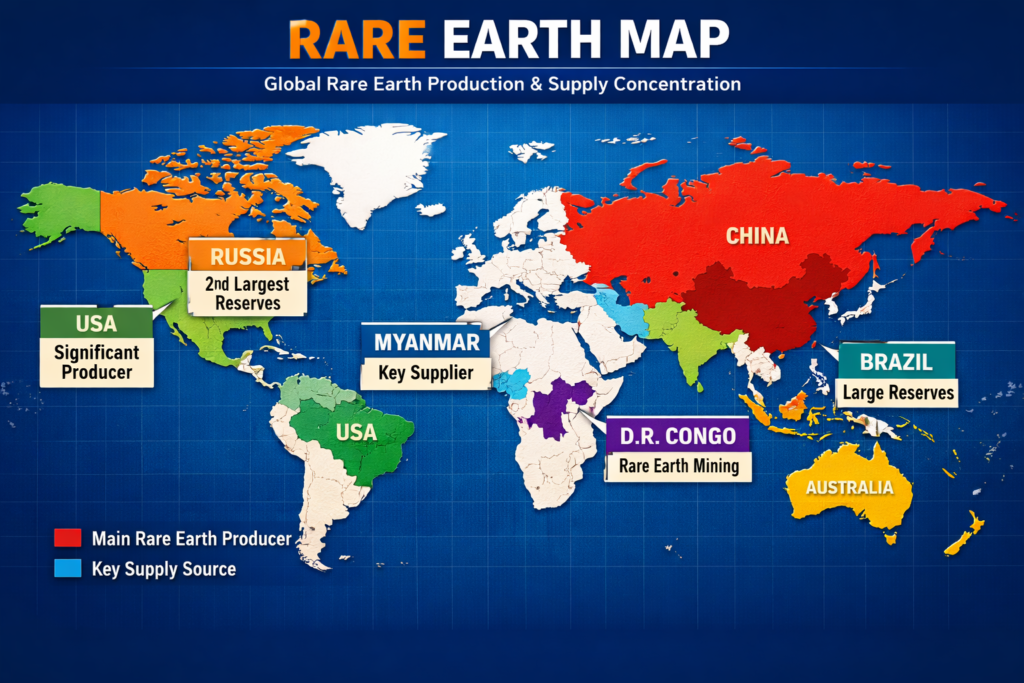
The world has a high concentration of rare earth elements in several areas, posing a high dependency risk. This concentration implies that any political, economic or environmental disturbance in these areas will have spread effects in world supply networks. This imbalance is even more urgent to the manufacturers and governments, as the demand towards EVs keeps growing.
Processing Dominance
The mining of rare earth minerals may be done in various regions of the world, but processing and refining may be concentrated. This has a bottleneck effect on the supply chain because raw materials will have to be moved across borders in order to be refined. This reliance adds logistic complexity and introduces other risks to the industry, including trade barriers and transportation time delays.
Environmental and Ethical Issues.
- Mining leads to soil erosion and threat of water pollution.
- The processing produces air pollution and hazardous waste.
- Consumes a lot of energy in extraction and refinement.
- Health and safety issues in some mining areas.
- Community issues of displacement and social impact.
Environmental Impact
Rare earth elements extraction and processing may be of great environmental impact unless it is done in a proper manner. Mining activities normally cause deforestation, soil erosion and pollution of the surrounding water bodies. The refining process also generates toxic wastes and emissions, which are a point of worry in the overall impact of EV production on the environment despite the advantage of clean usage.
Ethical Sourcing Problems.
Ethic issues also contribute significantly to the supply chain of rare earth. In certain areas, mining practices have been associated with low working conditions, low standard of safety, and low levels of regulation. Moreover, mining can cause displacement of the local communities or their loss of livelihood. These concerns demonstrate the necessity to have more stringent rules and open sourcing.
EV Industry effects.
Increased Cost of production.
Rare earth elements fluctuate in market prices and this can greatly affect the cost of the EV production. Manufacturers have to bear the price increase or transfer it to the consumers when prices increase due to the lack of supply or geopolitical tensions. This has the ability to stall the adoption of EVs by rendering them less affordable.
Production Delays
The disruption in the supply chain may cause delays in the production process, which will influence the availability of the vehicles in the major markets. Car manufacturers will not be able to achieve the required production volumes, resulting in delays in the launch, and increased queuing by consumers. It is also potentially detrimental to brand reputation and competitiveness.
Solutions and Alternatives.
Diversifying Supply Chains
Companies are also seeking alternative mining opportunities in other areas in an effort to decrease its reliance on a small number of suppliers. Governments and the non-state actors are investing in home production capacity and making international alliances. The diversification will be to establish a more balanced and robust supply chain which will be resilient to disruption.
Recycling Rare Earth Materials.
Recycling is proving to be a good alternative to minimizing the use of freshly mined materials. Using used batteries and electronic waste, industries can reclaim rare earth elements, and this will help them establish a more sustainable and circular supply chain. Such a strategy not only minimizes environmental effects but also enables the stabilization of supply in the long-term.
Conclusion
The dependency on rare earth is one of the most severe inconspicuous risks in the electric vehicle revolution. Although EVs present a way to achieve more sustainable transportation, due to their dependence on complicated and concentrated supply chains, issues of sustainability, cost stability, and geopolitical vulnerability are being raised. These issues will need a concerted campaign on the part of governments and industries, as well as researchers. The EV ecosystem can be made more resilient and really sustainable in the future through investing in diversification, recycling, and innovation.
FAQs
1. Which are the rare earth elements in EVs?
The applications of the rare earth elements are mostly in the electric motors and batteries and electronic systems to enhance efficiency and performance.
2. Why is rare earth dependency a risk?
Due to the concentration of supply in a limited number of areas, any imbalance will influence the prices and production of EV around the world.
3. Does it make it possible to make EVs without rare earth materials?
Yes, there are manufacturers that are working on rare-earth-free motors, but they are yet to be adopted widely.
4. What are the impacts of rare earth mining to the environment?
Unless handled in a responsible manner, it may lead to pollution, generation of wastes, and environmental destruction.
5. What action is being taken to decrease dependency?
Some of the efforts are recycling of materials, diversifying the supply chains and coming up with other alternative technologies.