



Learning is quickly going outside the classroom. Parents and educators today are searching for ways to have flexible, individualized systems of learning that are flexible enough to meet the needs of the child. The focal point of this change is homeschooling, microschools and hybrid education, which provide new opportunities to integrate academic knowledge and real-world skills.
The Move to Alternative Education.
The contemporary education system does not rely on textbooks and classrooms any longer. Families are also in search of systems that emphasize on understanding, rather than memorization. This change is shaped by the necessity to equip children with the skills that will help them to survive in the future when a flexible mindset, creativity, and critical thinking are more important than test results.
- Increasing need to have customized learning journeys.
- More access to online education options.
- Discontent with school curriculums that are strictly followed.
- Pay attention to imaginative, critical and living skills.
- I want to work flexibly and have a balanced life.
Different kinds of Modern Learning Models.
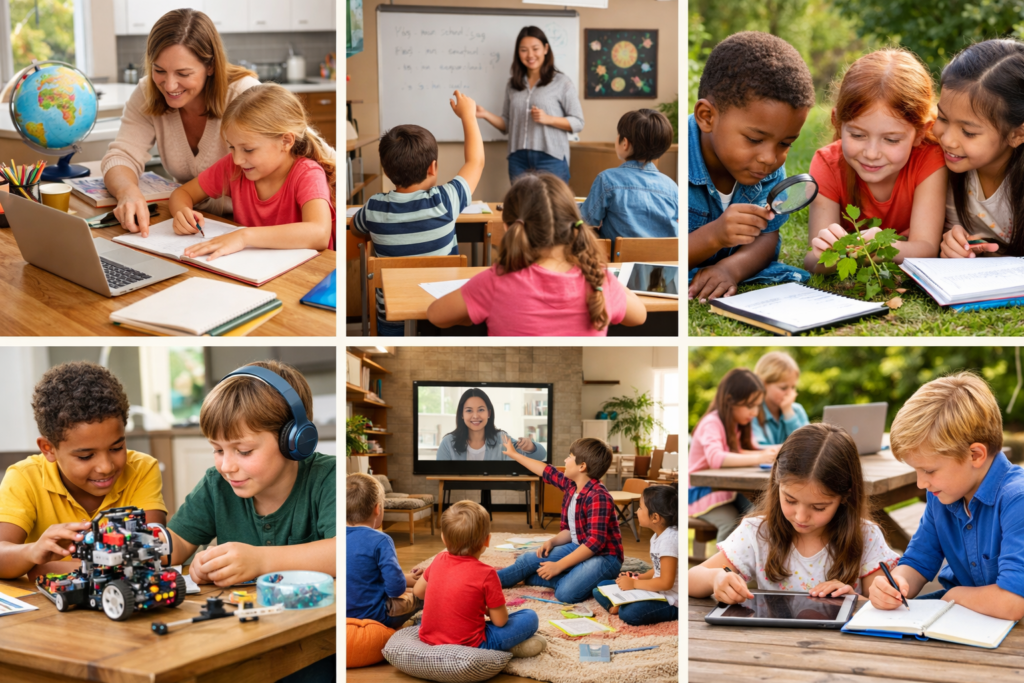
These models are not merely substitutes but a reconsideration of the way that education is to operate. They offer a variety of options and avenues instead of the uniform system which enables students to learn at their pace, focus on their interests, and gain practical skills which are often neglected due to traditional systems.
- Homeschooling, parent-designed curriculum.
- Small, intensive learning groups in microschools.
- Online and offline learning.
- Experiential and project based learning.
- Personal learning systems based on technology.
Homeschooling: Individualized Learning.
Flexibility and Personalization
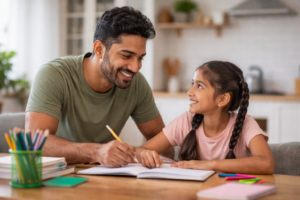
Homeschooling enables parents to create a program that suits them according to their child’s speed, interests and strengths. In contrast to the traditional schools, it is not pressurized to follow a set curriculum. Children are able to devote more time in areas that they struggle with and develop at a rapid rate in areas that they are good at and have a more comprehensive and meaningful grasp of concepts.
Challenges and Responsibilities
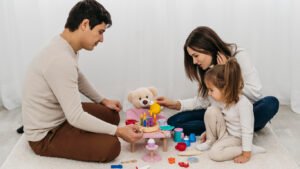
Although homeschooling is liberating, parents must be very committed. It can be hectic to plan lessons, discipline and make steady progress. Moreover, parents have to play an active role in establishing a social interaction avenue either in the form of community groups, extracurricular activities or joint learning arrangements.
Microschools: Small School, Large Impact.
Individualized Service in small groups.
Microschools are usually small groups of students, with educators being able to concentrate on each child. Such an arrangement promotes better interaction between students and teachers and makes education more fun and fruitful. It also establishes a conducive atmosphere in which students feel at ease sharing ideas and posing questions.
Hands-On and Team Learning.
Education in microschools can be much more than books. The students are involved into practical projects, discussions and problem solving in the real world. This method assists in building on teamwork, communication and hands-on learning that would equip the students with challenges in real life and not merely exams.
Blended Learning: Structure and Flexibility.
Blending Online and Offline Learning.
Hybrid education is a combination of classroom instruction and digital learning resources. Students can be in school taking up some subjects and on-line taking up others. This model is flexible and offers structure and can easily be adapted to various learning styles.
Developing Digital and Autonomous skills.
The hybrid system motivated the students to be in charge of their learning. They are taught how to research, analyze information and how to spend their time in the most effective way with the access to digital resources. These are critical skills in the current technology based world and offer a great advantage to the students.
The Technology in Education: The Change.
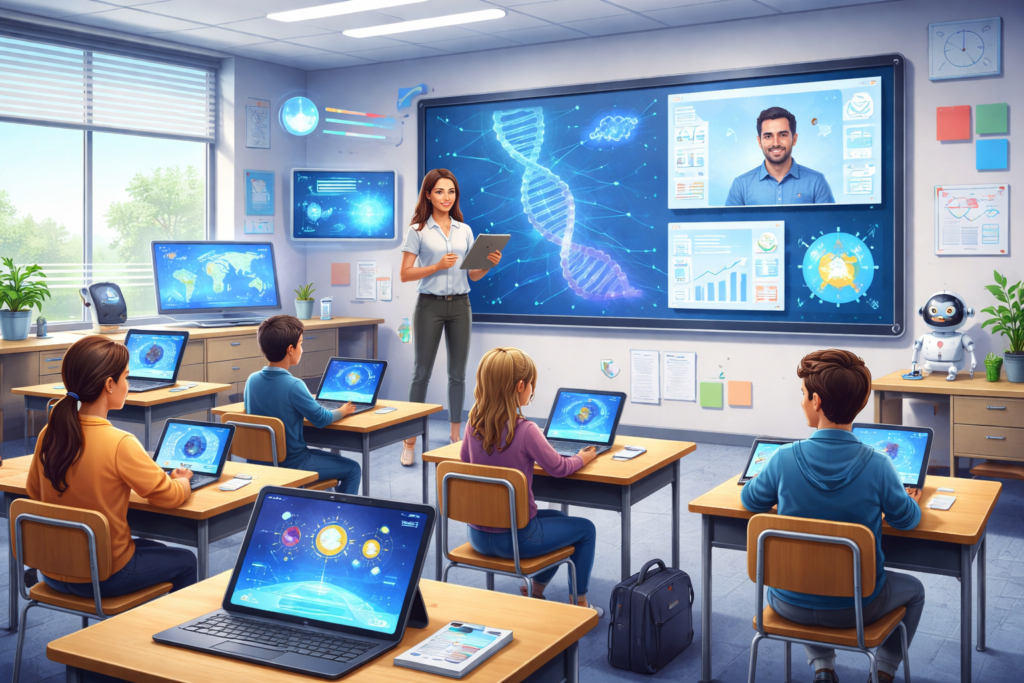
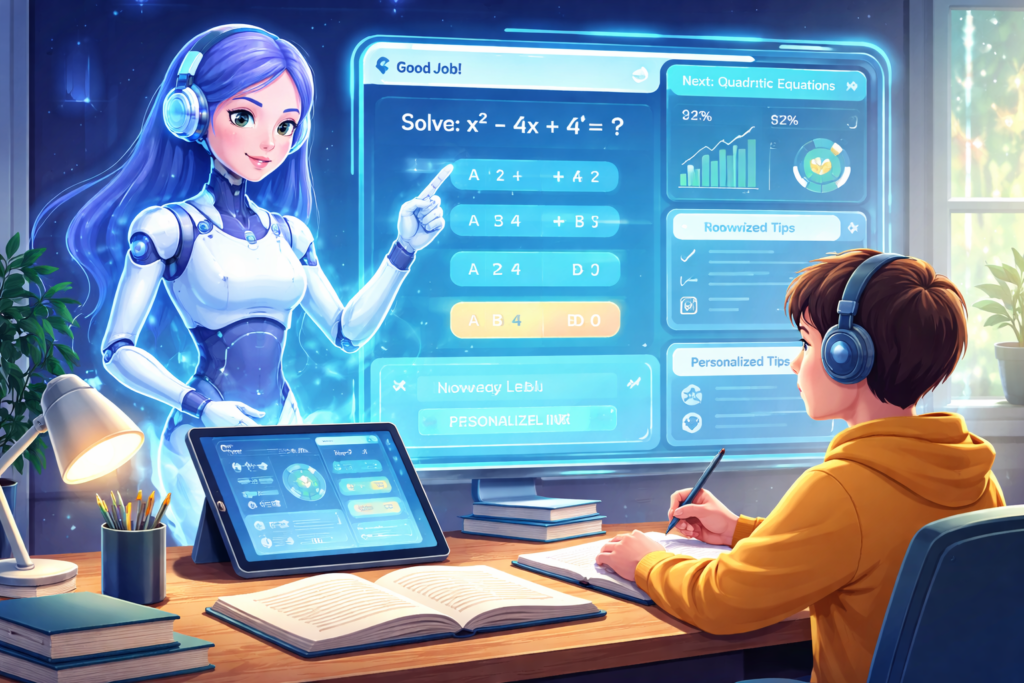
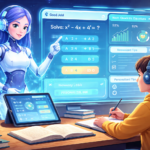
Modern education models have been supported by technology. It can be used in virtual learning rooms to AI-powered learning devices to facilitate personalized and accessible learning to students all over the world.
Digital learning allows interaction and engagement with learning via video, simulation, and gamification of learning, simplifying intricate topics. They also provide the opportunity to monitor progress in real-time and enable parents and educators to find the strong and weak sides and make improvements within a short time. Technology has been evolving and therefore will be used to improve the effectiveness of alternative education system even more.
How to select the Right Learning Path to Your Child.
The choice of appropriate education model is based on what your child likes, the learning style, and personality. There are children who do better in an independent setting such as homeschooling and others that do better in a collaborative type of learning such as microschools or the balanced approach of hybrid learning.
There are factors that parents should put into consideration before making a choice which include availability of time, access to resources and long term academic objectives. One should also be flexible with it- most of the families will test various models overtime and identify the best. Finally, the desired outcome is to generate a situation in which a child is motivated, confident and excited to learn.
Conclusion
Flexibility, personalization and adaptability are the future of education. Homeschooling, microschools and hybrid education are not merely fads, they are the reaction to the restrictions of the old systems. These models are molding a generation that is less dependent, more inventive and better equipped to handle the future due to their emphasis on personal needs of learning and practical skills.
Schooling is bound to become a process that recognizes learning, rather than memorization and development, as more families adopt these methods.
Questions and Answers (FAQs)
1. How is the primary distinction between homeschooling and microschools?
Homeschooling is home based parent directed schooling, and microschools are schooling in small groups of students with a guide/teacher.
2. Do all students fit in hybrid education?
Yes, hybrid education may be effective with most students, particularly those students who enjoy formal classroom education as well as their flexibility in online learning.
3. Are children in alternative education systems deprived of social interaction?
No, it is possible to sustain social interaction based on group activities, community programs, and learning in groups.
4. Do these new models of education have academic acknowledgment?
There are numerous other types of education that provide the certification based on open schooling or certified online programs.
5. What is the most appropriate model to my child?
The most appropriate option is based on the learning style of your child, his or her interests and the capability of your family to guide their child through the education process.