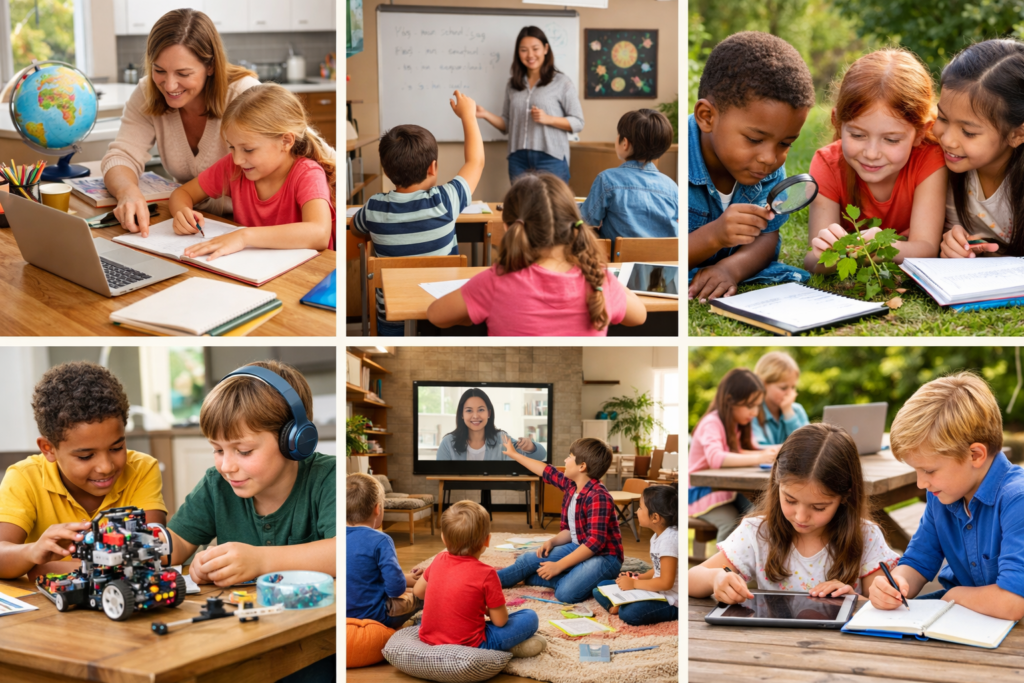




Education is radically changing its concept. The concept of AI-first schools, where AI takes up numerous of the traditional teaching functions, is becoming a disruption in world schools. They are based on sophisticated algorithms, adaptive learning platforms, and real-time information analysis to provide individual education with human teachers on demand.
With the changing technology, AI-first schools are not a mere concept anymore. They signify a trend towards increased automation, scalability and hyper-personalized learning experiences which are redefining the basis of the conventional education systems.
What are AI-First Schools?
- Teaching, curriculum and assessments are handled by AI systems.
- Students have fully personalized learning.
- Student progress is monitored in real-time with analytics.
- No set classes or routine timetables needed.
- Learning via digital and virtual platforms.
Learning the Essential Idea.
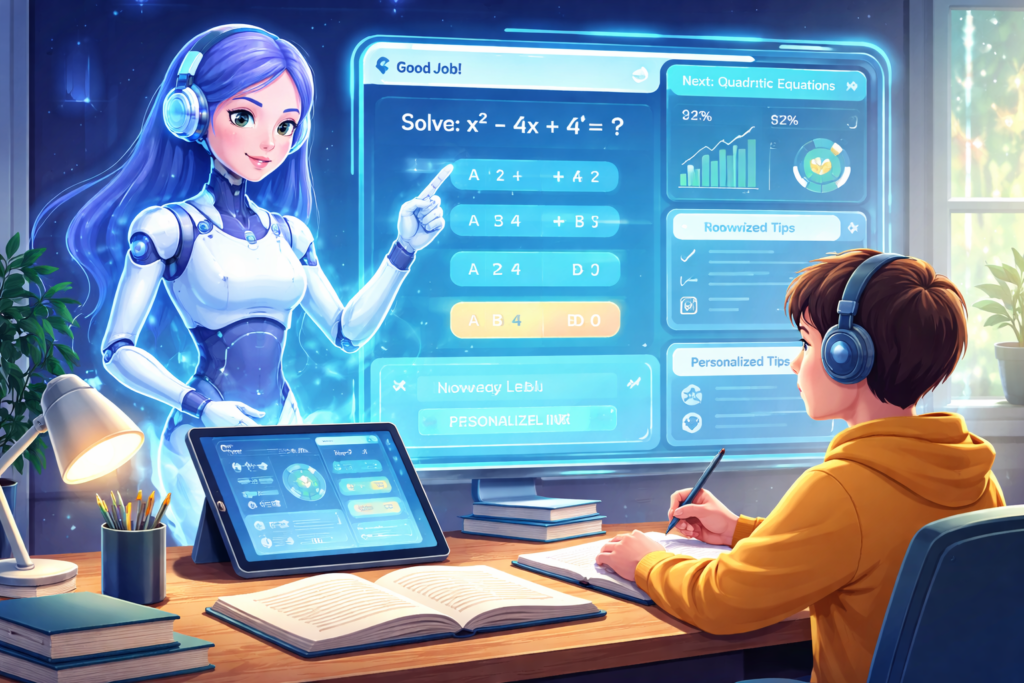
AI-first schools are learning systems that use artificial intelligence as the teacher. Rather than a standardized model of teaching, these systems will examine the behavior, speed and level of understanding of each student and develop a tailored learning experience. The AI is constantly developed according to the information, which means that the content will be relevant and effective to all learners.
Learning in an AI Environment.
Students with AI-first environments engage with intelligent platforms that provide lessons in the form of multimedia like simulation, videos, and interactive games. These systems are flexible in real-time- when a student does not understand a concept, the AI will re-teach it to him/her in a new manner. This produces a very receptive and interactive learning process that is usually unattainable in the traditional classrooms.
The advantages of AI-First Schools.
- Extremely individualized learning experiences to each student.
- Full time AI tutors and learning systems.
- Education to world audiences that is scalable.
- Quickly-improved performance and feedback.
- Less reliance on physical infrastructure.
Scale-based Personalized Learning.
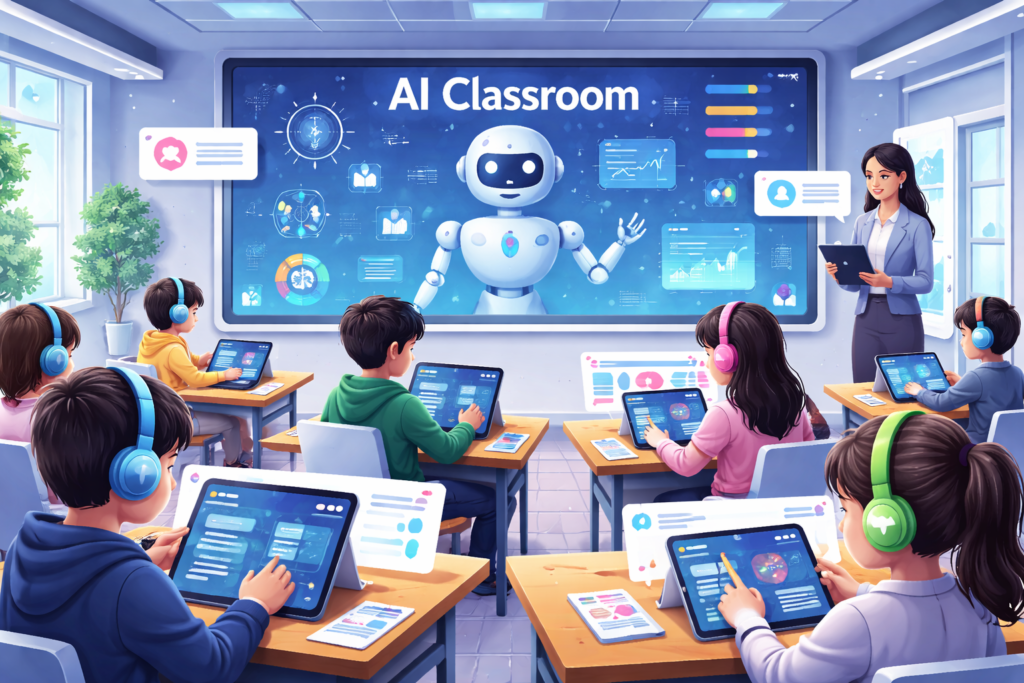
Among the largest benefits of AI-first schools is their capability to provide students with individualized learning to a great number of students at once. Every learner has his or her own way based on the area of strength and weakness hence understanding and retaining it well. Such a degree of individualization is almost impossible in traditional classrooms where the teacher is not able to pay much attention to each individual student.
Flexibility and Accessibility.
With the AI-first schools, geographical and time limitations are eliminated and students can study anywhere and anytime. This flexibility leads to inclusion in education, particularly to students in remote or underserved communities. It also enables the learners to learn at their pace, alleviating the stress and enhancing learning experiences.
The Replacement of the Traditional Teaching Roles by AI.
Teaching and Presenting.
The AI systems provide lessons in the form of structured modules developed based on extensive datasets and learning models. Such platforms may be used to provide information in various forms, so that students with various learning styles will be able to grasp the same idea. The AI keeps on improving its teaching techniques depending on student feedback.
Evaluation and Respond.
AI is also a continuous assessment in contrast to traditional exams, which can be used to determine student performance. It monitors all the contacts and determines patterns and vulnerabilities in real time. The feedback is real-time and actionable and enables students to rectify errors in real-time as opposed to the periodic evaluations.
Engagement and Motivation among students.
Gamification, adaptive challenges, and behavioral analytics are AI-based elements that allow keeping students active. They are able to know when a learner is becoming unfocused and to change the content or the level of difficulty so as to help the learner to focus again. Such an interactive process provides a more engaging and encouraging learning process.
Difficulties and Anxieties.
absence of Human Connection.
Although AI can copy most of the functions of the teacher, it is unable to substitute human teachers with their emotional intelligence and empathy. Students will be denied mentoring, socialization and emotional care, without which cannot be considered to be holistic.
Data Security and Privacy.
AI-first and schools are based on the gathering and analysis of data about students. This poses a question on the way sensitive information is stored, used and secured. To ensure that these systems are trusted it is important to ensure that there are good data security measures.
Technological Dependence
The use of AI can also result in the lack of critical thinking when students are over-reliant on the automated directions. There should be a balance between technology facilitating learning and curtailing the independent problem solving skills.
Digital Divide
High-speed internet and sophisticated devices are not available to all students. This disparity has the potential to bring about inequality, with some groups being the beneficiaries of AI-based education, and others being left out.
Future of AI-First Schools.
blended Learning Models.
It is possible that the future of education will consist of AI effectiveness mixed with human interaction. The teachers can assume the roles of mentors, facilitators, and emotional guides whereas AI can complete the work on instruction and evaluation. This combination strategy has the potential to present the best of both worlds.
Use of Modern technologies.
AI-first schools are going to be further improved by new technologies such as virtual reality, augmented reality, and emotional AI. Such tools will provide an engaging learning experience and enhance student interaction to ensure education is more interactive and effective.
Conclusion
AI-first schools are transforming the way education is conducted and making it more personal, scalable and accessible. Though they also bring great benefits, they also present certain challenges that have to be considered. Education will not depend on AI to replace teachers as it will be more about redefining the role of a teacher in an AI-driven ecosystem.
Striking a balance between human judgement and technological ingenuity will be the main factor in creating an education system that is efficient and highly human.
FAQs
1. What is AI-first school?
An AI-first school is a type of school where artificial intelligence takes care of teaching, assessment, and curriculum delivery with limited human involvement.
2. Is AI able to totally substitute teachers?
AI can cope with numerous academic assignments, but human teachers remain invaluable in terms of emotional support, mentorship, and socialization.
3. Do AI-first schools work?
They may be very effective because of personalized learning, but the success will be dependent on the implementation, access to the technology, and student engagement.
4. What are the risks of AI in education?
The biggest ones are privacy issues with data, a lack of human experience, and too much dependence on technology.
5. Will AI-first schools be the new thing?
They will probably play a big role in the future, especially in hybrid education models that combine AI effectiveness with human help.